A plan with gates, not dates
Four phases. You move up when you hit the criterion — two weeks or six. Nothing unlocks because time passed.
One cranky shoulder shouldn’t cost you your legs, your back, your conditioning — or four months of progress. Back to Beast works out what you can still load, and how heavy.
Coming to iPhone · 7-day free trial at launch
The whole idea
Every other rehab app tells you to rest. This one tells you what you can still load, and how heavy.
Here is the actual product — not a mockup of one. Ten screens from the flow you would go through, in the order you would meet them.
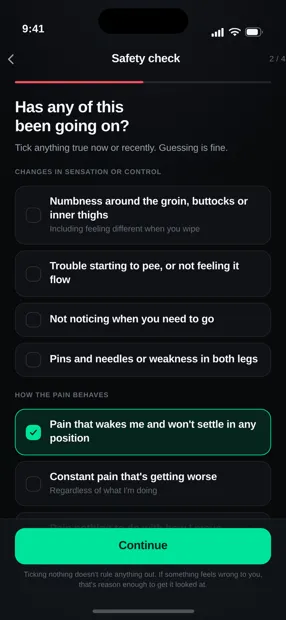
The safety check, before anything else
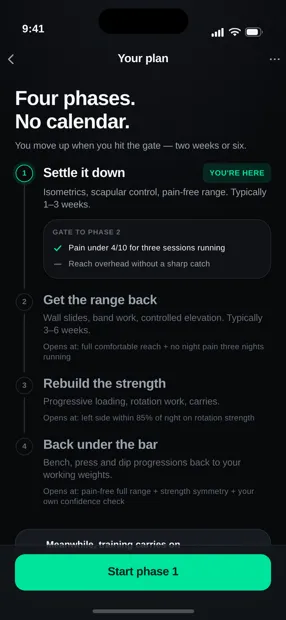
A plan with gates, not dates
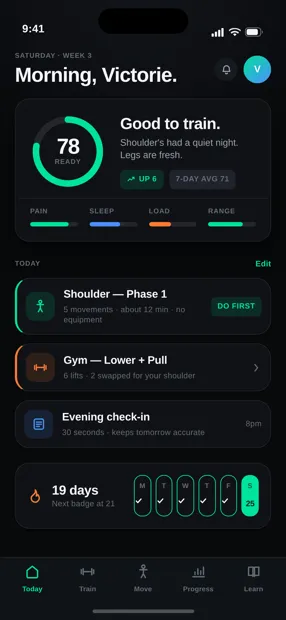
Today, in one glance
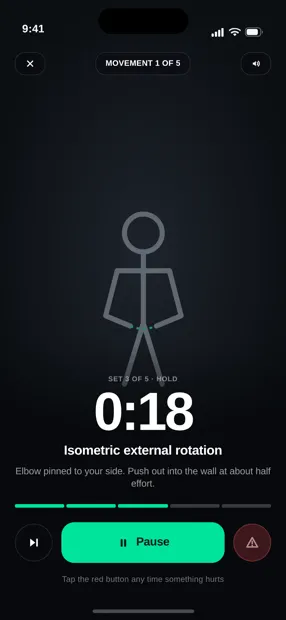
The player, with the pain button always there
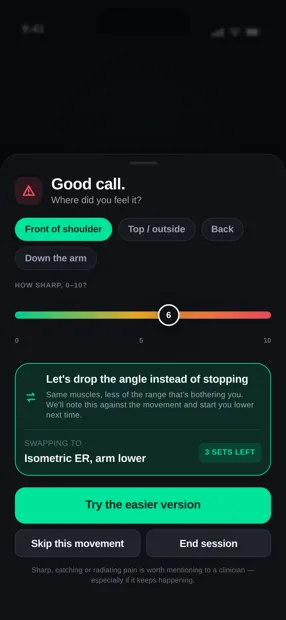
It hurts, so it eases down a rung
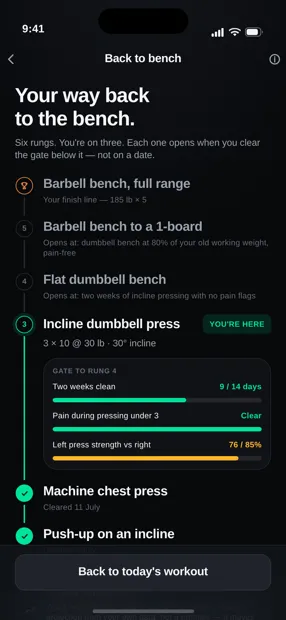
The substitution ladder
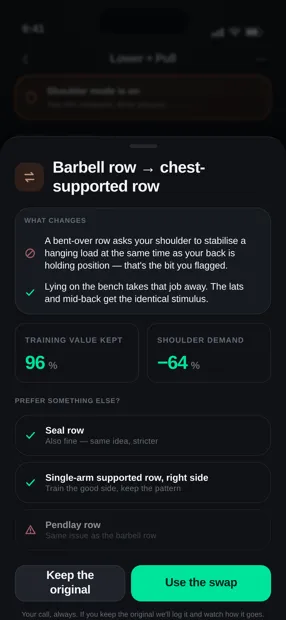
Why this was swapped
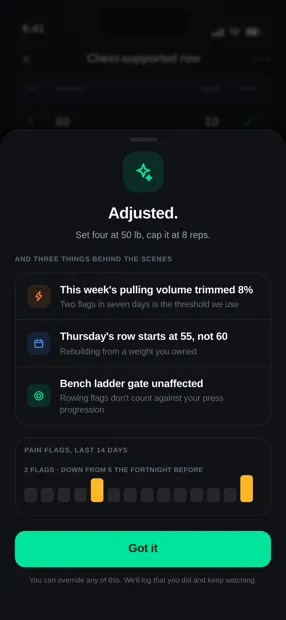
Load, adjusted and named
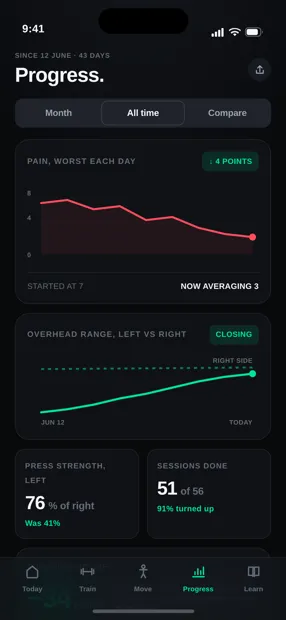
Proof it's moving
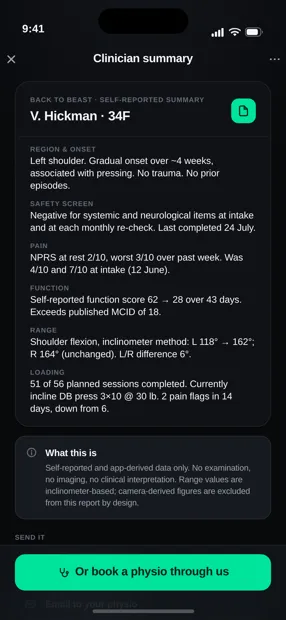
A summary for your physio
Every session
Tell it where it hurts and it rebuilds the week around that — swapping the lifts that load the sore position for ones that don’t, and leaving everything else exactly where it was. Legs, hinge, core and conditioning stay live from day one. Only the sore side waits.
Every swap is explained mechanically: the movement you were doing loads a position you flagged, the replacement doesn’t, and it keeps most of the training value. No black box, and you can override any of it.
The signature feature
For anything you can’t currently do, the substitution ladder gives you the rungs between here and the full movement. Each one opens when you hit a measured criterion — not when a calendar says so.
Illustrative. Your ladder is built from the movement you name and what you can currently tolerate.
Screen by screen
Not a gallery. These are the decisions — what the app will say, what it refuses to say, and why the difference matters when you are the one who is hurt.
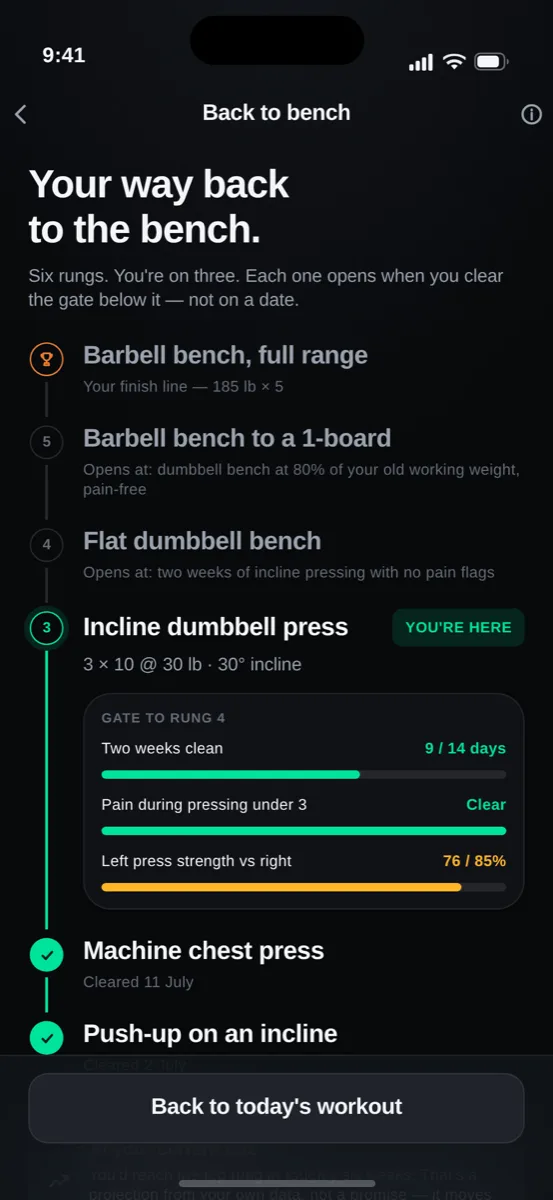
E2 · The substitution ladder
“When can I bench again?” is the question. Every other product answers it with silence or a calendar. This answers it with rungs — and the measured gate that opens each one.
You move up when you clear the gate. Two weeks or six.
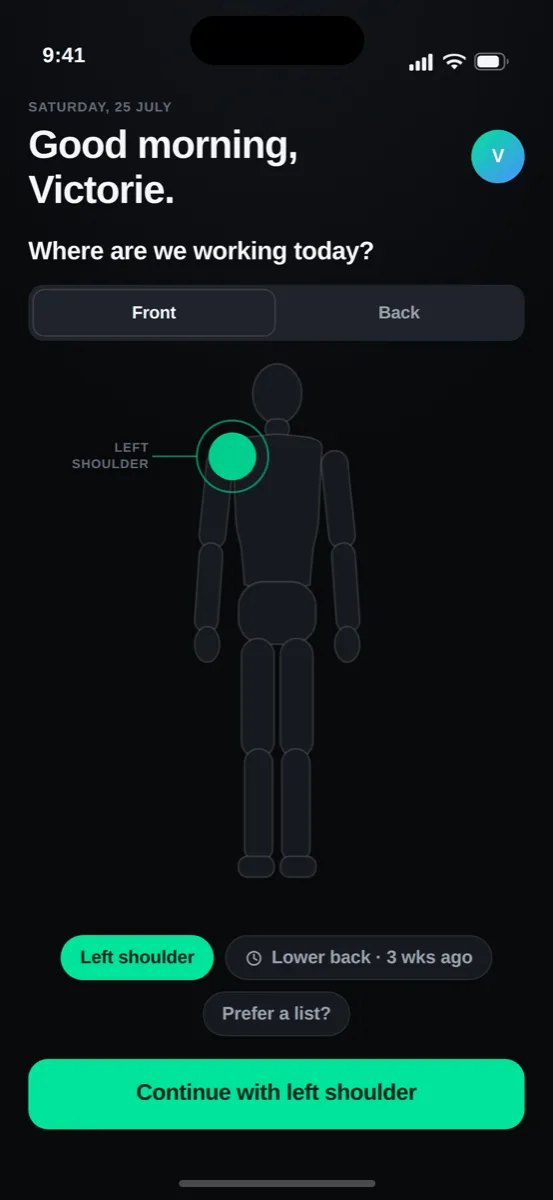
C1 · Where it hurts
Or read a plain list, if you would rather. Areas you have logged before come back as chips, so a returning week takes seconds rather than a form.
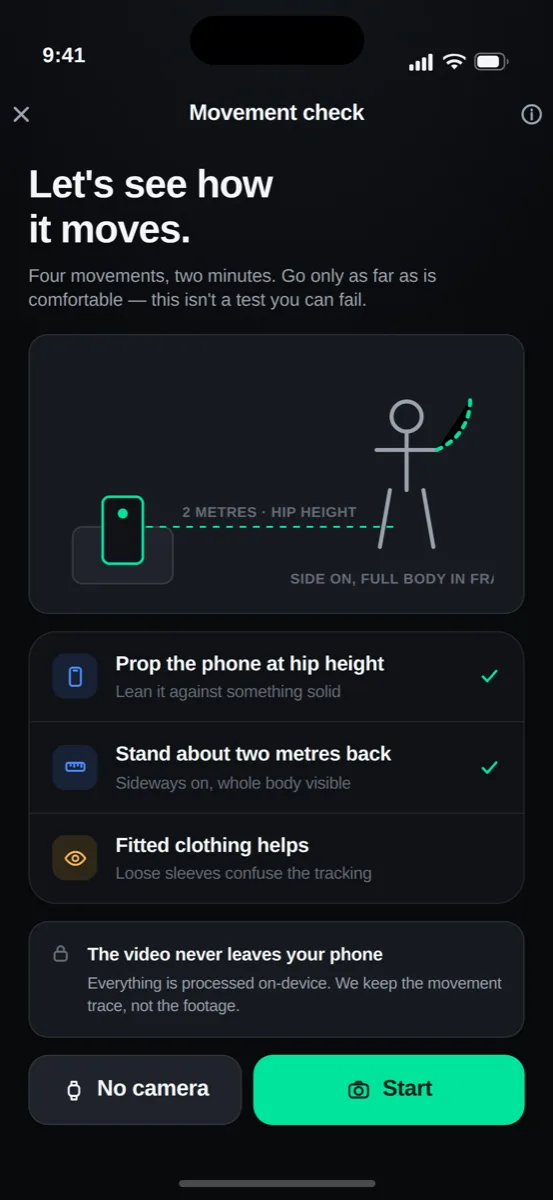
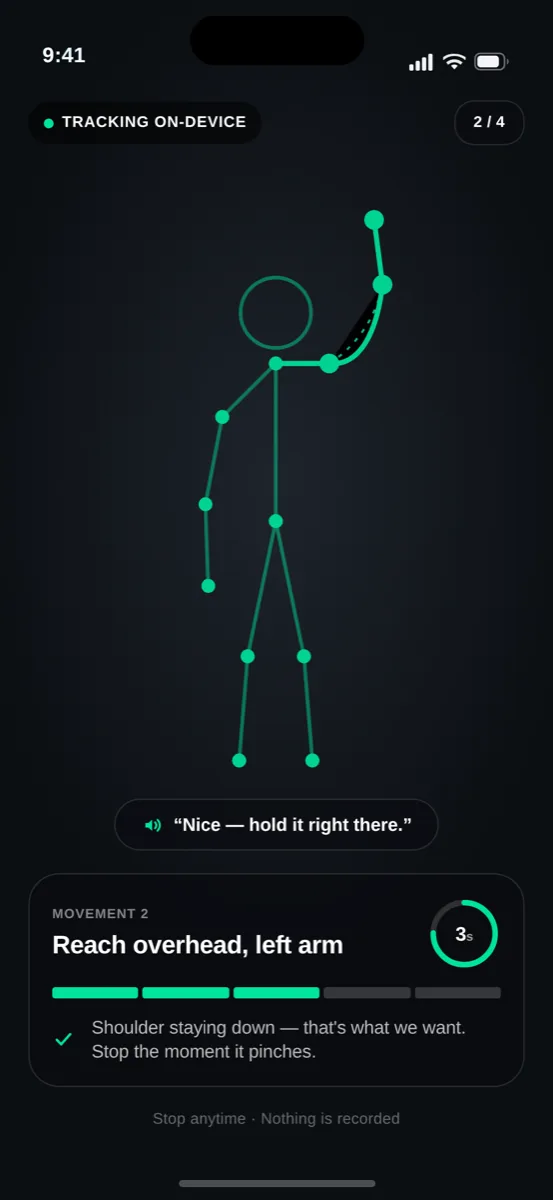
C7 → C8 · The movement check
Where the camera sits is the largest source of error in single-camera tracking, so setup is its own step — that is what makes a re-check in a fortnight comparable. Then the overlay runs entirely on your phone.
Note what is not on the live screen: a figure in degrees. A phone camera is good enough to count reps and compare your two sides. It is not good enough to state a number a physio would act on, so it doesn’t.
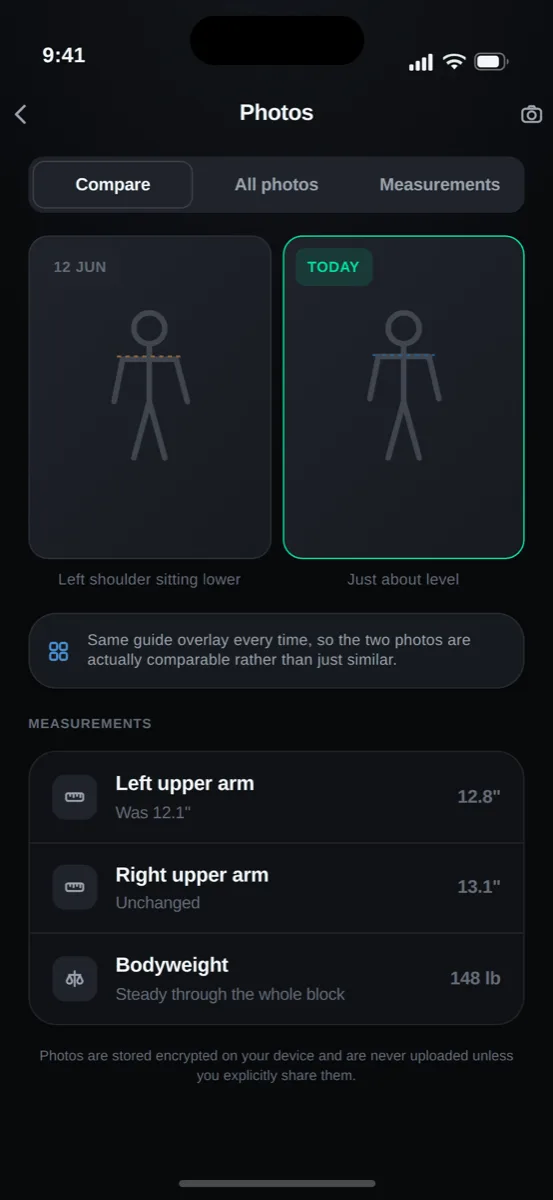
F5 · Photos over months
The same guide overlay every time, so two photos taken a month apart are genuinely comparable rather than merely similar. They never leave your device.
F1 → F2 · Readiness
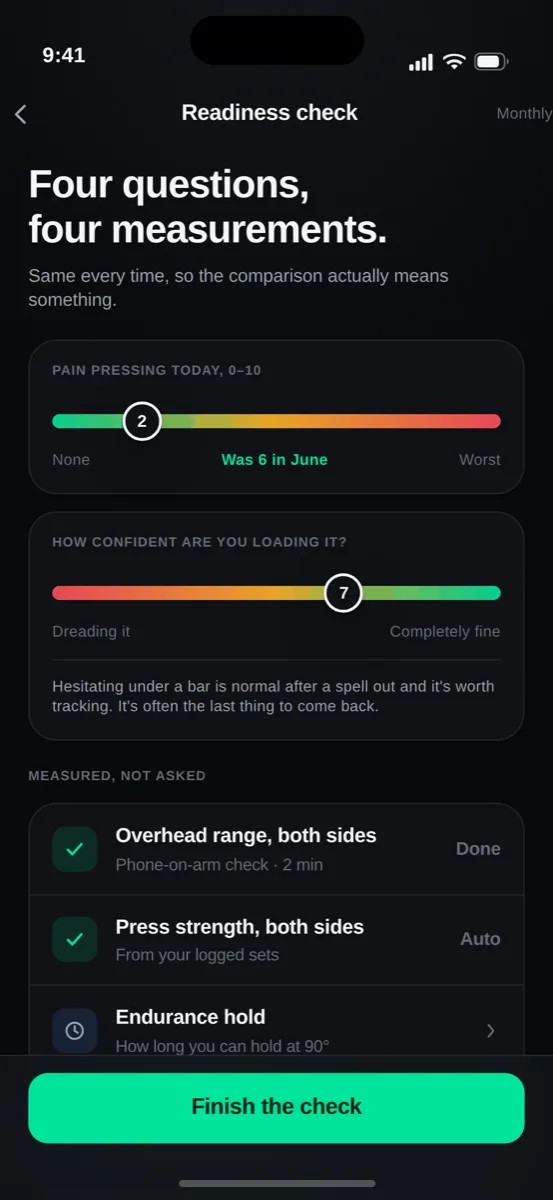
Four questions and four measurements, identical every time. One asks how confident you feel loading it — the input most apps skip, and the one that best predicts whether someone actually gets back.
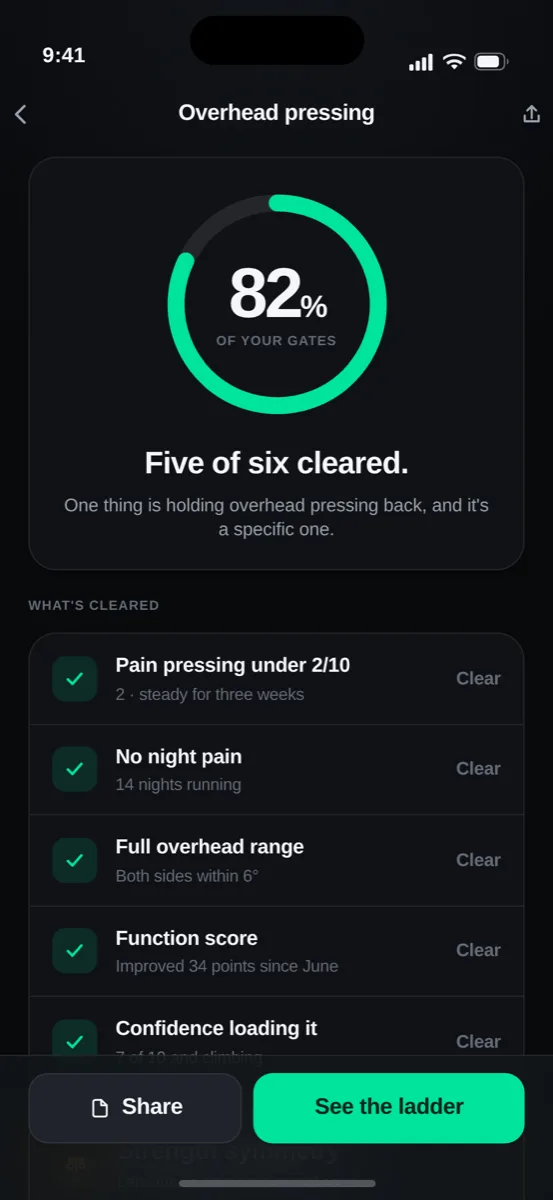
“82%” here is five of your own six gates cleared, with the sixth named. It is arithmetic you can check, not a score handed down to you.
F6 · For your clinician
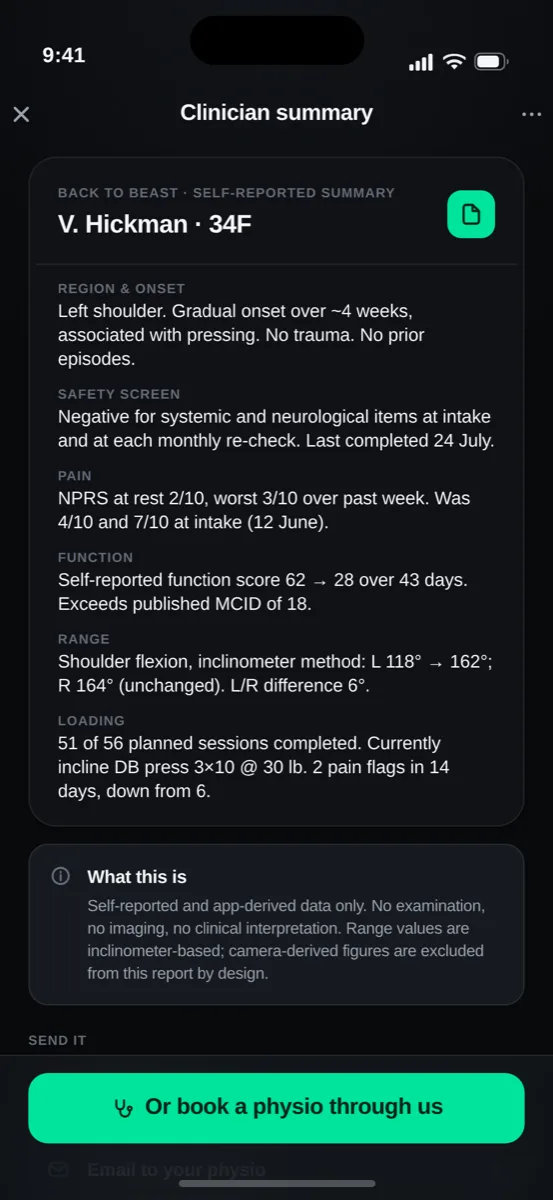
A structured history your physio would otherwise spend a quarter of the appointment pulling out of you — onset, pain, function, range, what you have actually been loading.
Sensor and Trainer readings only. Camera figures are left out of this document by design, and it says so on the page.
G3 → G4 · The other people
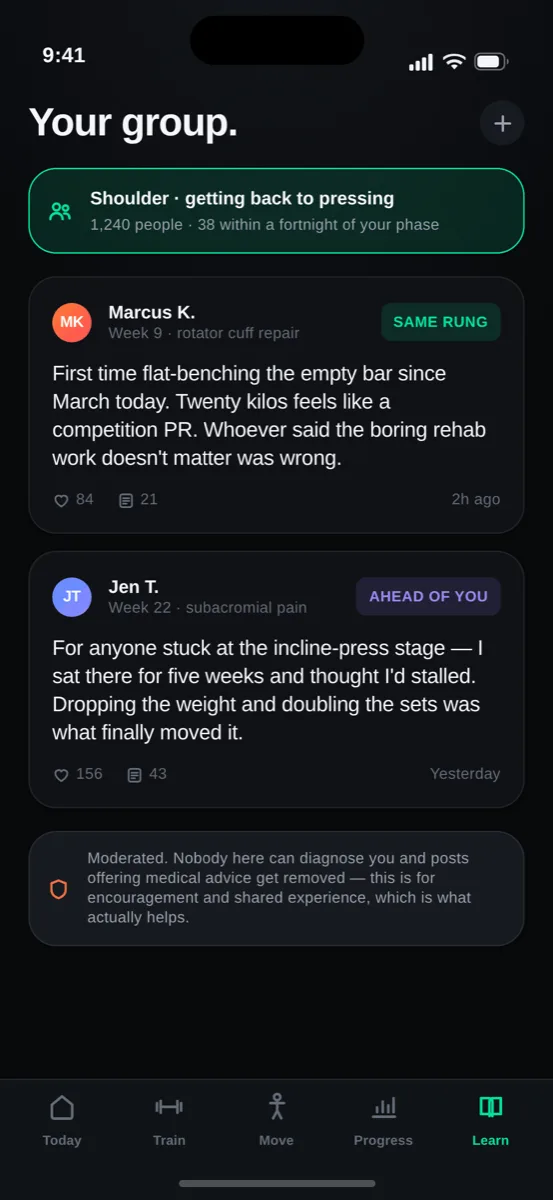
Grouped by area and phase, never a global feed. Someone eleven weeks into the same thing has more to say to you than the rest of the internet does.
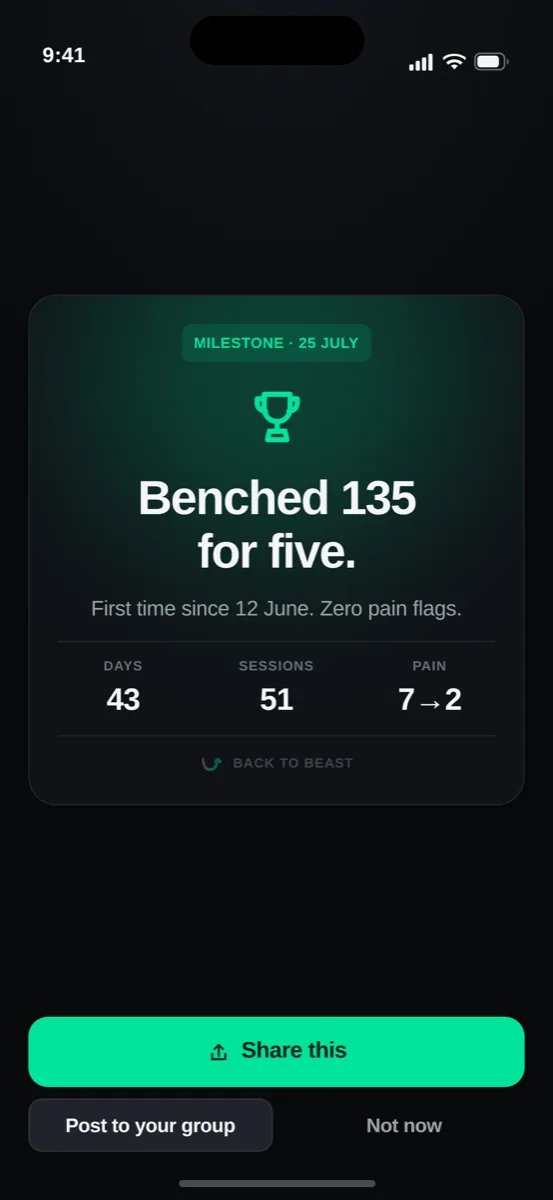
And when you hit something, the card shows the journey rather than a vanity number — no comparison with anybody else.
The short version
What you get
Four phases. You move up when you hit the criterion — two weeks or six. Nothing unlocks because time passed.
Flag pain on set three and set four changes, along with this week’s volume and where the next session starts. Every adjustment is named, and every one can be overruled.
Tap it mid-set and the app eases the movement down a rung, offers the easier version, logs it against that exercise, and carries on. It doesn’t end your session and it doesn’t just say “see a professional”.
Pain, range, function and the days you turned up — charted against your own history and your own other side. Never against anybody else.
Everything you’ve logged, in the form a clinician can read in two minutes — so the appointment goes on the examination instead of the history.
A group grouped by area and phase, not a global feed. Someone eleven weeks into the same rebuild has more to say to you than the rest of the internet does.
Fifty, sixty, seventy and still lifting
Somewhere after fifty the guidance quietly changes from “here’s how to get back to it” to “maybe take it easy”. That advice costs more than it saves. Strength and the ability to load are the things worth protecting hardest in the decades where they’re hardest to rebuild.
Back to Beast doesn’t have a separate, gentler mode for older lifters, and that’s deliberate. It’s the same engine — the same ladder, the same gates, the same honest measurement — reading what you can currently tolerate. The plan moves when you clear a criterion, and it doesn’t care what year you were born.
Post-operative? Run the plan past your surgeon or physio first — the app says so on screen, and hands them the summary in one tap.
Where we stop
Back to Beast is a general wellness product. It doesn’t diagnose anything, it won’t tell you what you have, and it won’t put a probability on it. What it does do is check — before anything else — for the specific symptoms clinicians want to hear about, and tell you plainly who to see and how soon.
The check is weighted rather than a tripwire, because roughly four in five people have at least one positive answer and sending all of them to urgent care helps nobody. And it isn’t a one-off: there’s a “something’s changed” door on every screen in the app.
A fresh injury goes straight to a person
A fall, a crash or a direct blow is outside what this is built for. The app says so and routes you out rather than triaging it.

Privacy
There is no analytics SDK in this app and no advertising SDK. Not aggregated, not hashed, not “anonymised”. Health data doesn’t go to either, because neither is there to send it to.
Pricing
The safety check, the education library and your own history are never behind the paywall. That isn’t a promotion — it’s enforced in the code.
$0
$119 / year
$20.99 / month
Seeing a physio who uses Back to Beast? Their clinic code makes it free.
The founder
Founder · Back to Beast
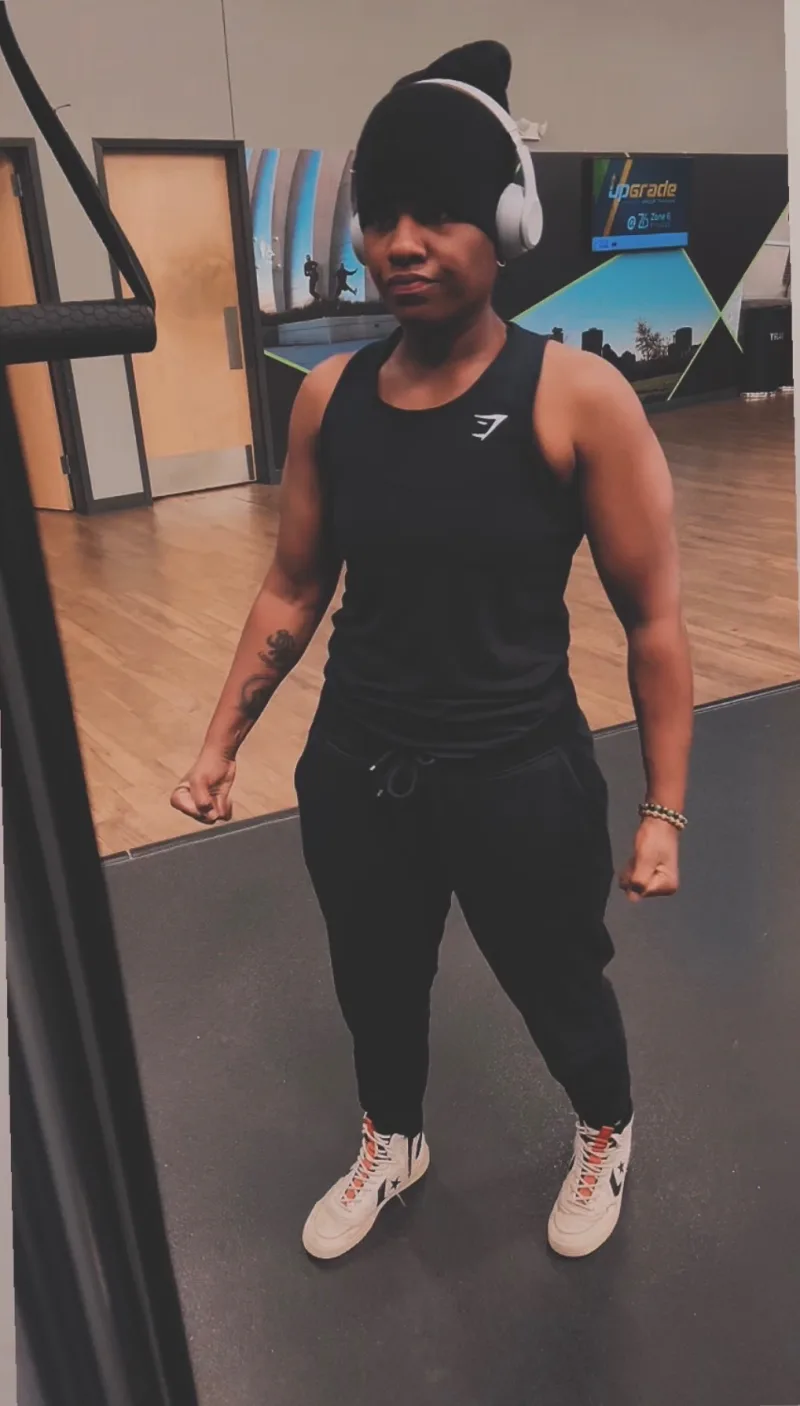
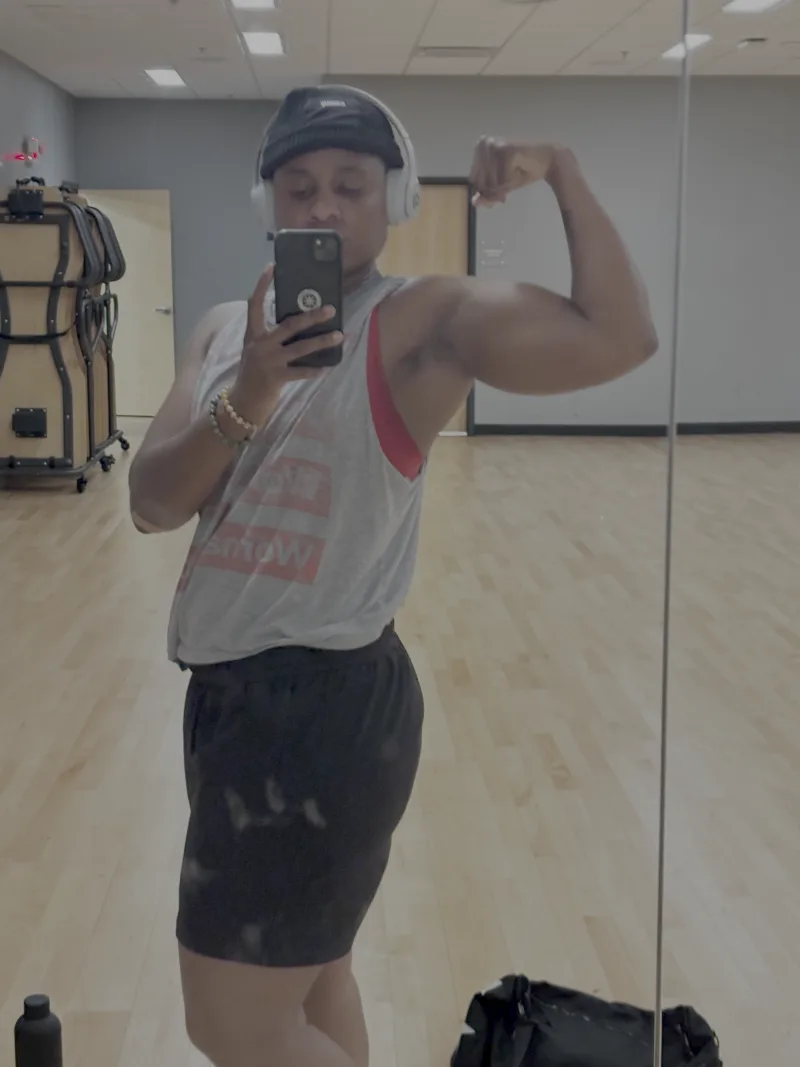
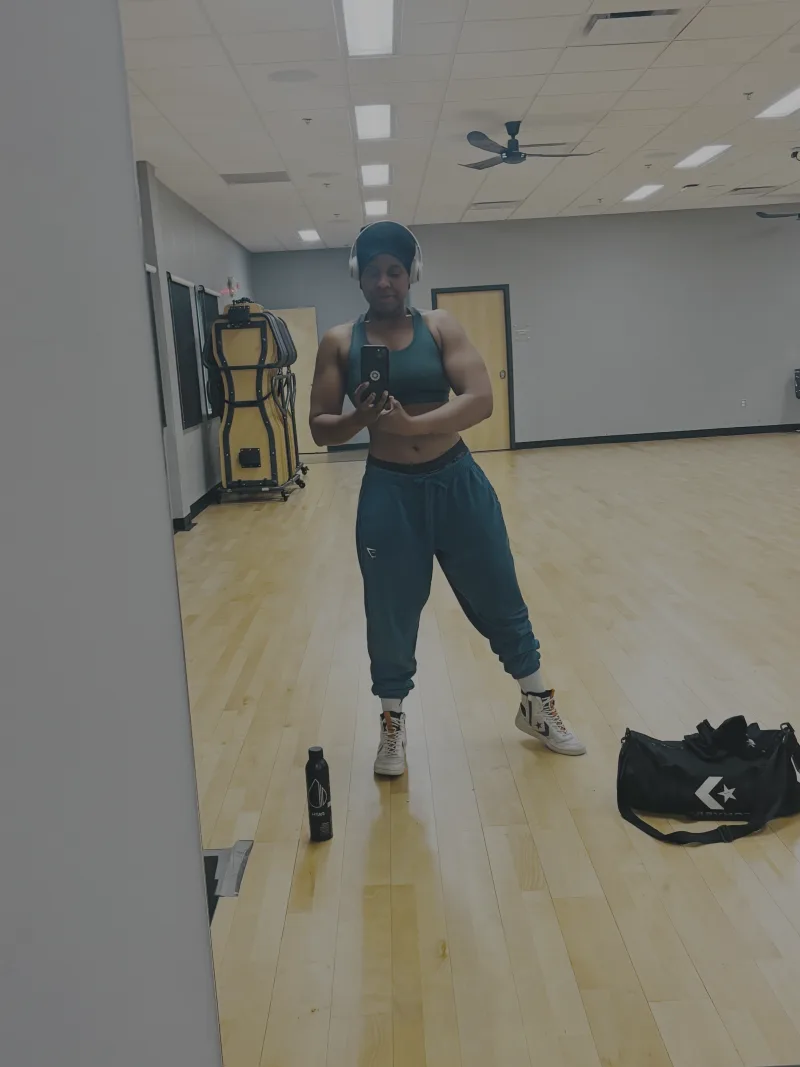
“Recovery takes patience, hard work, and a plan. But with all three, you can come back stronger than before.”
Launching on iPhone
One email at launch. Not a newsletter, not a drip sequence, and your address is never sold or shared.
Back to Beast is a general wellness product. It is not a medical device and has not been evaluated by the FDA. It does not diagnose, treat or cure anything. Nothing here is medical advice, and nothing in the app is a substitute for a clinician who can examine you. If you’ve had a fall, a crash or a direct blow, or if something feels wrong to you, get seen in person.